

We cannot consciously change what we have not first learned to observe. As awareness increases, consciousness expands. Expanded consciousness gives us a greater range of choices, and conscious choice is the foundation of self-empowerment!
The objective, therefore, is not to eliminate every uncomfortable feeling. It is to develop the awareness necessary to respond to life with greater clarity, flexibility, and intention.
This article explores that progression through the chakra system — understood here not as a set of energy centers to be corrected, but as a map of consciousness.
In Integrative Chakra Therapy®, chakras are understood not merely as energy centers but as centers of consciousness. They influence how we perceive the world, interpret our experiences, form characteristic patterns, and respond to the circumstances of life.
Each person has a dominant chakra that contributes to a lifelong disposition. This dominant chakra helps shape how we naturally approach relationships, communication, creativity, responsibility, intuition, power, and meaning.
At other times, another chakra may become predominant because a particular experience calls our attention to an opportunity for growth.
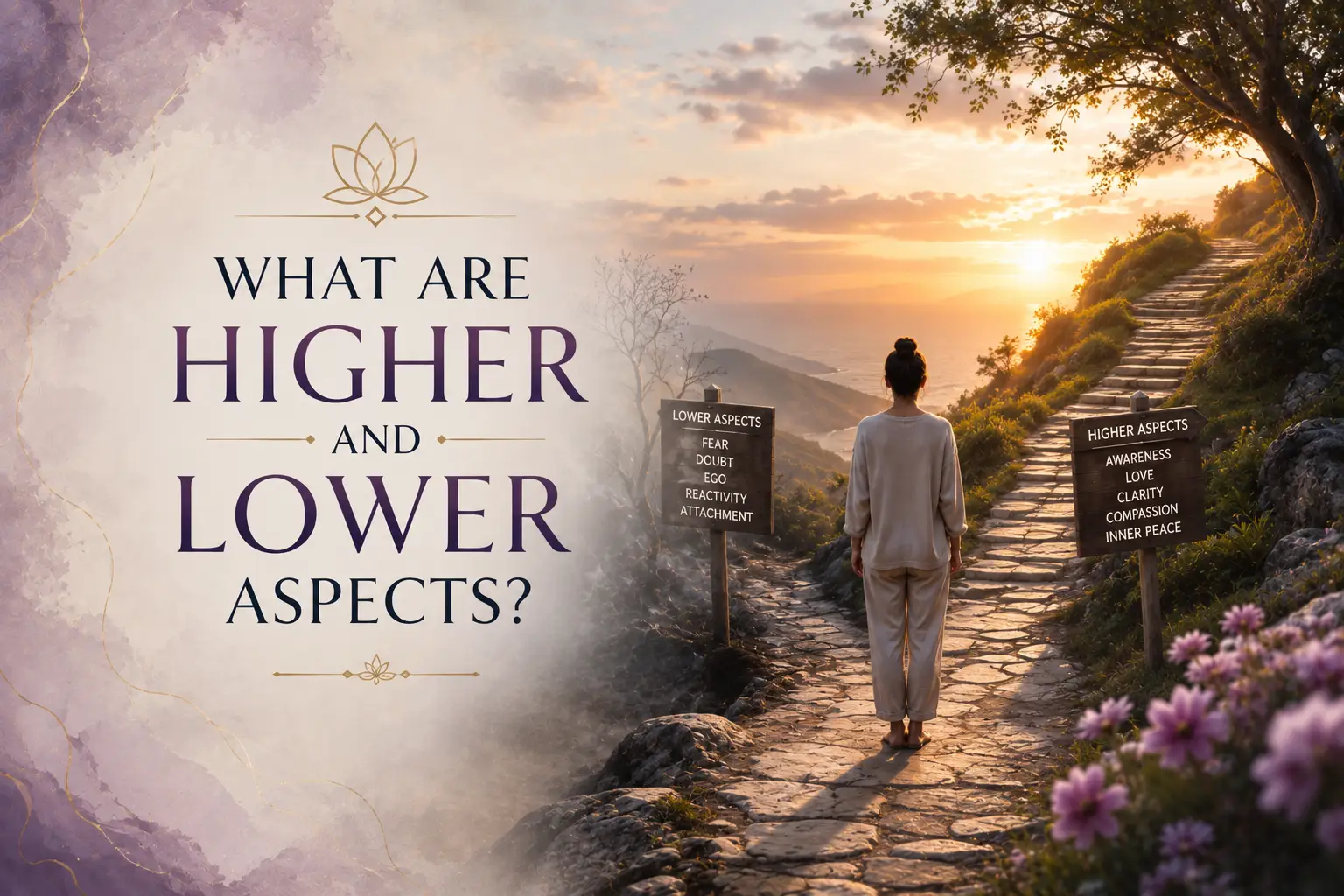
Every chakra can express Higher and Lower Aspects. A Lower Aspect is not a defect, punishment, or indication that someone has failed spiritually. It represents an opportunity to bring greater awareness to one or more dimensions of life.
A Higher Aspect emerges as the opportunity is recognized, understood, and integrated into greater wisdom and self-empowerment.
| Lower Aspect | Higher Aspect |
|---|---|
| An opportunity to bring greater awareness to a dimension of life | Awareness that has been recognized and integrated |
| Not a defect, punishment, or spiritual failure | Not a permanent achievement or endpoint |
| Indicates where attention is being called | Reflects the growth already taken up |
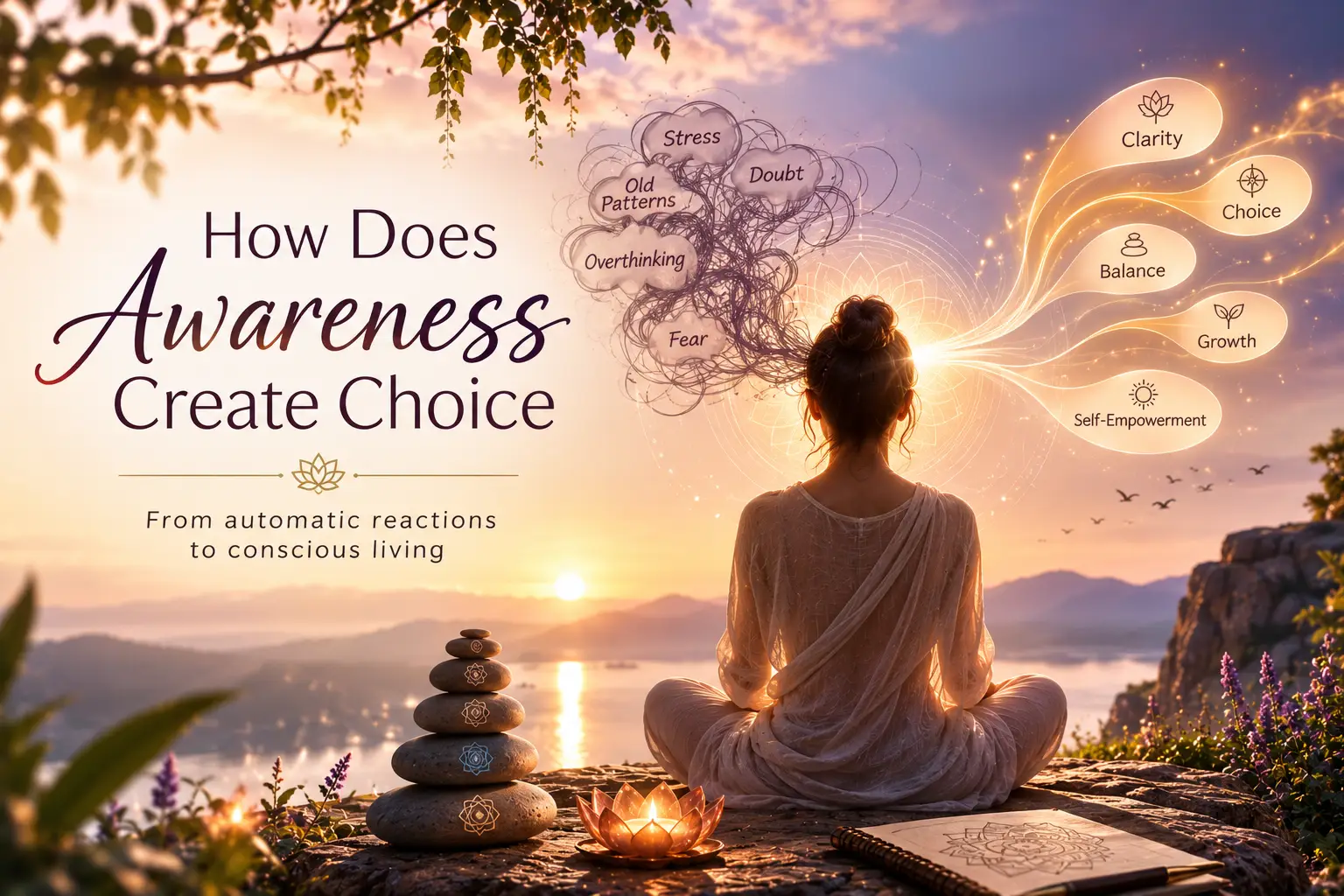
Many of our reactions occur automatically. We experience something, interpret it through familiar patterns, and respond before we have consciously considered what is happening.
These patterns may have developed through childhood, relationships, cultural expectations, previous experiences, or our characteristic way of perceiving the world. They may once have helped us adapt, but some may no longer serve us, and the deeper part of our consciousness brings them to the surface so we may clear them.
The purpose of awareness is not to judge, block, or deny these patterns. It is to bring them into consciousness so they may be understood, integrated, and, when appropriate, released.
When we pause and observe what is taking place, a space can emerge between experience and reaction. Within that space, choice becomes possible. Taking pause is the spiritual juice itself — it is an act of self-empowerment.
This progression is central to my work: awareness expands consciousness. Expanded consciousness creates greater choice. Conscious choice leads to self-empowerment.
Self-empowerment does not mean controlling every circumstance or never feeling distressed. It means becoming increasingly capable of recognizing how we are participating in our experience and choosing how we wish to respond.
This perspective changes the questions we ask when we experience stress. Instead of asking only, “How can I make this feeling disappear?” we can also ask:
These questions do not replace appropriate medical or psychological care. They add a dimension of self-inquiry that can help us participate more consciously in our development.
No single practice is appropriate for everyone. A technique should not become another demand or another reason to believe that we are failing.
Begin with what feels accessible and useful. The objective is not to perform a practice perfectly. It is to create conditions in which awareness can deepen.
Try naming what you feel:
This language creates an important distinction. You are not saying, “I am fear.” You are recognizing that fear is an experience occurring within your consciousness.
Emotions carry information. They deserve acknowledgement, but they do not always need to determine our actions.
Notice whether the mind is repeating the same concern, predicting an outcome, criticizing you, or attempting to solve something that cannot be resolved in the present moment.
Rather than fighting the thought, observe it from a distance:
Reflective journaling can make these patterns easier to recognise. Even asking these questions helps surface the answers.
Sometimes the most important question is not, “How do I stop feeling this?” but:
Spiritual inquiry does not require adherence to a particular religion. It can involve intuition, contemplation, prayer, gratitude, purpose, or a personal relationship with something greater than oneself.
For the physical and breath-centered practices that support this work day to day, see our companion article on nervous system regulation and spiritual wellness.
Many wellness practices are presented as solitary activities, but healing and growth don’t always happen in isolation.
Supportive people can help us feel seen, understood, and connected. A healthy community provides opportunities to share experiences, learn from others, and remember that we do not have to navigate every challenge alone.
Light News Institute has offered guided group meditations since 1992. Our Monday Night Chakra Healing and Discourse brings people together every other week at Bamboo Garden Wellness Center in Encinitas and online.
These gatherings are not based on the idea that another person will “fix” you. They create a supportive environment where meditation, self-awareness, chakra consciousness, and spiritual exploration can happen in community.
Sometimes the practice we need is not another technique. It is authentic connection.
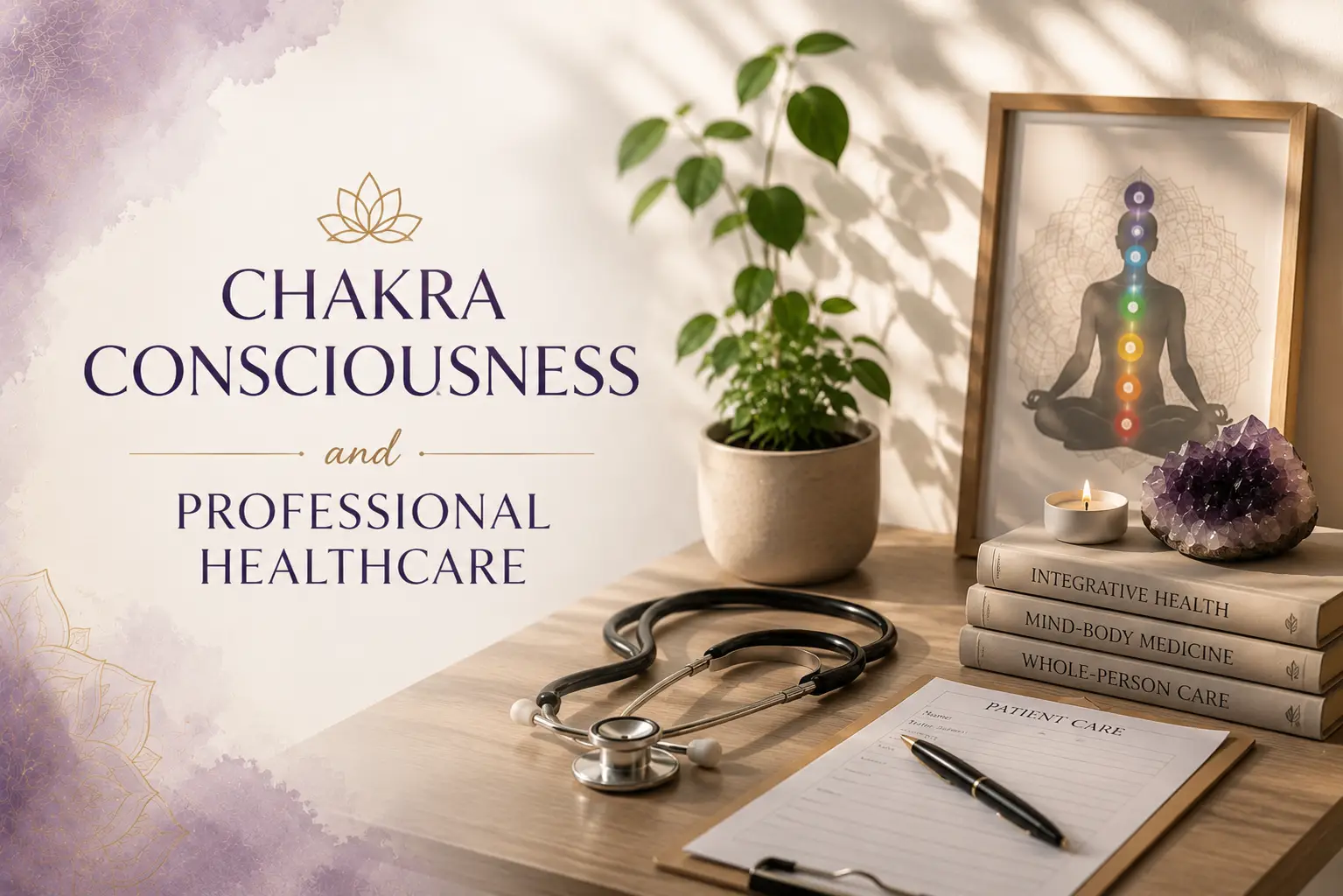
Spiritual practices and complementary wellness approaches can coexist with conventional healthcare when their purposes and boundaries are clearly understood.
Meditation, grounding, breath awareness, reflective journaling, spiritual counseling, and energy-based practices may support self-awareness, meaning, and personal growth. They should not be presented as substitutes for medical or mental-health treatment.
Please consult an appropriately qualified professional when persistent anxiety, depression, sleep difficulties, trauma-related experiences, physical symptoms, or other concerns interfere with everyday life.
Seeking professional help is not a failure of spiritual practice. It can express wisdom, responsibility, and self-respect.
A quiet breath, a walk in nature, meditation, journaling, prayer, or a conversation with someone we trust can create the space for awareness. Within that space, we may begin to recognize the physical sensations, emotions, thoughts, beliefs, and spiritual questions influencing our response.
Awareness expands consciousness. Expanded consciousness gives us greater choice. Through conscious choice, we become increasingly self-empowered.
The purpose is not to reject difficult feelings or force ourselves into serenity. It is to understand ourselves more fully and respond to life from a place of greater presence, wisdom, compassion, and conscious intention.
Integrative Chakra Therapy® understands chakras as centers of consciousness. They offer a way to explore characteristic perceptions, responses, Higher and Lower Aspects, and opportunities for growth. This spiritual model complements self-inquiry but is not presented as medical treatment for the nervous system.
Each person has a dominant chakra that contributes to a lifelong disposition. It helps shape how we naturally approach relationships, communication, creativity, responsibility, intuition, power, and meaning. At other times, another chakra may become predominant because a particular experience draws our attention to an opportunity for growth.
No. A Lower Aspect is not a defect, punishment, or indication that someone has failed spiritually. It represents an opportunity to bring greater awareness to one or more dimensions of life.
Both can involve presence, self-awareness, reflection, meditation, meaning, and intentional choice. Spiritual wellness may also include intuition, prayer, metaphysical exploration, chakra consciousness, or a personal sense of purpose.
No. Energy-based and spiritual practices should not replace necessary medical or psychological care. They may be used as complementary approaches to self-awareness and spiritual development.
No. Energy-based practices are not substitutes for medical or mental health treatment. They can be explored as complementary spiritual practices, but anyone with health concerns should seek professional care.
You are invited to join our Monday Night Chakra Healing and Discourse sessions, offered every other Monday in person at Bamboo Garden Wellness Center in Encinitas and online. Each gathering includes guided meditation, spiritual discourse, and a brief energy-balancing experience.
Participation is free, with voluntary contributions welcomed.
For a more personal exploration of your chakra consciousness, Higher and Lower Aspects, and opportunities for self-empowerment, you may also book a private session with Dr. Richard Jelusich.
Part 1 covered the practices. Part 2 covers the map underneath them — how the chakras function as centers of consciousness, what Higher and Lower Aspects mean, and how awareness becomes choice.